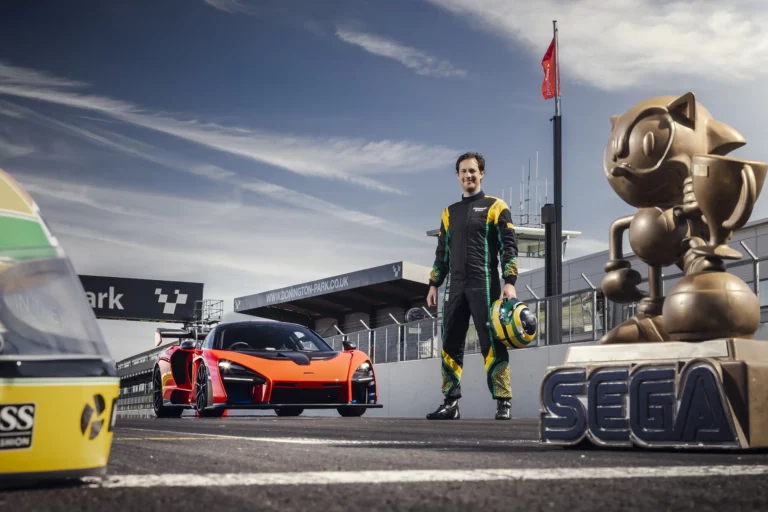
Situated within the rolling parkland of Leicestershire near the village of Castle Donington, Donington Park is one of Britain’s most historic and technically rewarding racing circuits. Since opening in 1931, the circuit has earned worldwide respect for its flowing layout, dramatic elevation changes and fast, demanding corners that reward confidence and precision above outright aggression.
Unlike many modern circuits, Donington Park follows the natural contours of the landscape. The result is a lap that feels organic, constantly asking drivers and riders to balance speed with commitment.
Today Donington remains one of the United Kingdom’s premier venues for motorcycle racing, GT competition, historic motorsport and club racing while continuing to host international championships throughout the year.
In Brief
- Donington Park first hosted motor racing in 1931, making it one of Britain’s oldest permanent circuits.
- The circuit hosted the 1993 European Grand Prix, remembered for Ayrton Senna’s legendary opening lap in wet conditions.
- The Craner Curves are widely regarded as one of the greatest corner sequences in British motorsport.
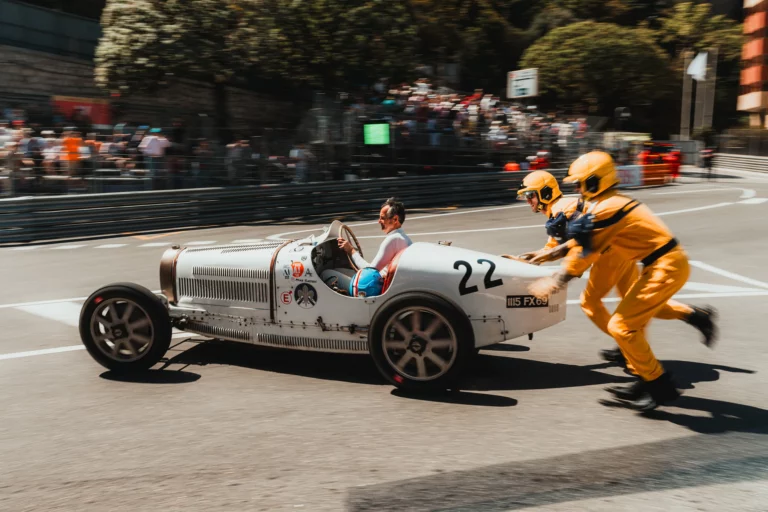
- Pre-war Silver Arrows from Mercedes-Benz and Auto Union raced at Donington before the Second World War.
- The circuit became one of the principal homes of the World Superbike Championship.
- Tom Wheatcroft’s restoration saved Donington from disappearing and preserved its historic character.
History
Donington Park first welcomed racing in 1931, becoming one of Britain’s earliest permanent road racing venues. Built within the grounds of the Donington Hall estate, the circuit quickly attracted Europe’s leading manufacturers, including Mercedes-Benz and Auto Union, whose legendary Silver Arrows dominated pre-war Grand Prix racing.
Following the Second World War, the circuit temporarily ceased racing before reopening in the 1970s under the leadership of entrepreneur and collector Tom Wheatcroft. His extensive restoration preserved Donington’s historic character while modernising the venue for contemporary competition.
The circuit achieved worldwide fame in 1993 when it hosted the European Grand Prix. During rain-soaked conditions, Ayrton Senna produced one of the greatest opening laps in Formula One history, overtaking four rivals before the end of the first lap—an achievement that permanently cemented Donington’s place in motorsport folklore.
Although Formula One never returned, Donington became a cornerstone of the Superbike World Championship, British Superbikes and numerous international championships.
Circuit Design
The Grand Prix circuit measures 4.020 kilometres and is widely regarded as one of Britain’s most naturally flowing layouts.
The lap begins with the famous descent through Redgate into the spectacular Craner Curves before climbing towards the Old Hairpin and McLeans. Unlike circuits dominated by stop-and-go braking zones, Donington rewards maintaining momentum through long, uninterrupted sequences of corners.
The Melbourne Loop, added in the 1980s, introduced additional technical complexity while preserving the circuit’s original rhythm.
Generous elevation changes continually alter vehicle loading, requiring drivers to adapt their braking, steering and throttle application throughout every lap.
LENGTH
4.020
kilometres
WIDTH
10–12
metres
DIRECTION
CW
clockwise
TURNS
12
5 left – 7 right
SURFACE
Asphalt
LONGEST STRAIGHT
565
metres
ELEVATION CHANGE
36.1
metres
OPENED
1931
95 years ago
Donington Park is defined by its fast, flowing character and the way its opening half follows the natural contours of the Leicestershire landscape. Significant elevation changes, blind approaches and interconnected corners reward commitment and momentum, while the later part of the lap introduces heavier braking and slower technical sections that require competitors to change rhythm considerably.
The lap establishes its character immediately through Redgate before descending through the Craner Curves, one of Donington’s defining sequences. Here, speed, accurate positioning and confidence are essential as the circuit falls rapidly towards the Old Hairpin before climbing again through Starkey’s Bridge and Schwantz Curve towards McLeans and Coppice. The character then changes substantially: the Fogarty Esses introduce heavy braking before the Melbourne Hairpin and Goddards place greater emphasis on rotation, traction and disciplined corner exits.
Although the Craner Curves provide Donington with its most recognisable driving challenge, the circuit’s defining difficulty comes from combining the commitment required through its fast, undulating opening sections with the braking and traction demands that follow. Drivers and riders who preserve momentum through the natural terrain while adapting cleanly to the slower final section are generally rewarded most strongly.
| Corner |
|---|
| T1 · Redgate 100° · Right · 83 m |
| T2 043° · Right · 164 m |
| T3 · Craner Curves 043° · Left · 152 m |
| T4 · Old Hairpin 060° · Right · 44 m |
| T5 027° · Left · 38 m |
| T6 033° · Left · 75 m |
| T7 · McLean's 073° · Right · 67 m |
| T8 · Coppice 122° · Right · 177 m |
| C1 · The Esses |
| T9 076° · Left · 19 m |
| T10 070° · Right · 41 m |
| T11 · Melbourne Hairpin 178° · Right · 67 m |
| T12 · Goddards 168° · Left · 89 m |
Donington Park occupies an important position in British and European motorsport history. Originally opened for motorcycle competition in 1931, it subsequently developed into Britain’s first permanent park circuit and became an important international automobile racing venue during the years immediately before the Second World War.
Its pre-war Donington Grands Prix were particularly significant, bringing the dominant continental Grand Prix machinery of Mercedes-Benz and Auto Union to Britain and exposing British spectators to the extraordinary technological development of European racing during the 1930s. After decades of inactivity following wartime requisition, the circuit was revived by Tom Wheatcroft and reopened for racing in 1977, beginning its modern period as one of Britain’s principal motorsport venues.
Donington has subsequently hosted an exceptionally broad range of international competition, including Formula One, MotoGP, World Superbikes, touring cars, GT racing, endurance competition and major national championships. Its single Formula One World Championship event, the 1993 European Grand Prix, became one of the circuit’s defining moments when Ayrton Senna produced his celebrated opening lap in wet and changing conditions.
Motorcycle racing remains equally fundamental to Donington’s identity. Its origins lie with motorcycles, and the circuit has played important roles in both Grand Prix and production-based international racing, including hosting the first World Superbike Championship round in 1988. Combined with its continuing presence in British Touring Cars, British Superbikes, GT competition and historic racing, this gives Donington an unusually broad heritage across both two- and four-wheeled motorsport.
Donington Park therefore represents more than another historic British racing circuit. Its history connects pre-war Grand Prix racing, the post-war revival of British circuit competition and the development of modern international motorcycle and automobile championships. Few venues have participated in so many different periods of European motorsport while retaining such a recognisable relationship between the circuit and its original parkland setting.
Visitor Experience
Donington Park offers one of Britain’s most authentic motorsport experiences.
The natural hillsides surrounding the circuit provide excellent viewing opportunities, particularly overlooking the Craner Curves and Old Hairpin, where spectators can appreciate the speed and commitment required through the fastest sections of the lap.
The venue is also home to the renowned Donington Grand Prix Collection, founded by Tom Wheatcroft. Although its format has evolved over the years, Donington remains closely associated with one of the finest collections of historic Grand Prix cars ever assembled.
Outside major race weekends, visitors can enjoy track days, manufacturer experiences, driving schools and corporate events throughout the year.
Climate
| Month | High °C | Low °C | Rainfall mm | Rainy days | Daylight h |
|---|---|---|---|---|---|
| January | 7° | 2° | 57 | 13 | 8.3 |
| February | 7° | 2° | 48 | 11 | 9.9 |
| March | 10° | 3° | 51 | 12 | 11.9 |
| April | 12° | 4° | 59 | 12 | 14.0 |
| May | 15° | 7° | 61 | 12 | 15.8 |
| June | 18° | 10° | 68 | 12 | 16.8 |
| July | 20° | 12° | 71 | 13 | 16.3 |
| August | 20° | 12° | 67 | 12 | 14.7 |
| September | 17° | 10° | 59 | 10 | 12.6 |
| October | 13° | 8° | 67 | 12 | 10.6 |
| November | 9° | 4° | 64 | 13 | 8.7 |
| December | 7° | 2° | 64 | 12 | 7.7 |
Monthly averages for Donington Park Circuit, 1991–2020.
Generated using Copernicus Climate Change Service information 2026 (CC BY 4.0).
Neither the European Commission nor ECMWF is responsible for any use that may be made of the Copernicus information or data it contains.
Location
Donington Park is located near Castle Donington in the English Midlands, approximately 20 kilometres south-east of Derby and only a few minutes from East Midlands Airport.
Its central location makes it one of the most accessible major circuits in the United Kingdom while placing it within easy reach of Birmingham, Nottingham and Leicester.
Address
Donington Park
DE74 2RP Castle Donington
England
United Kingdom
Website