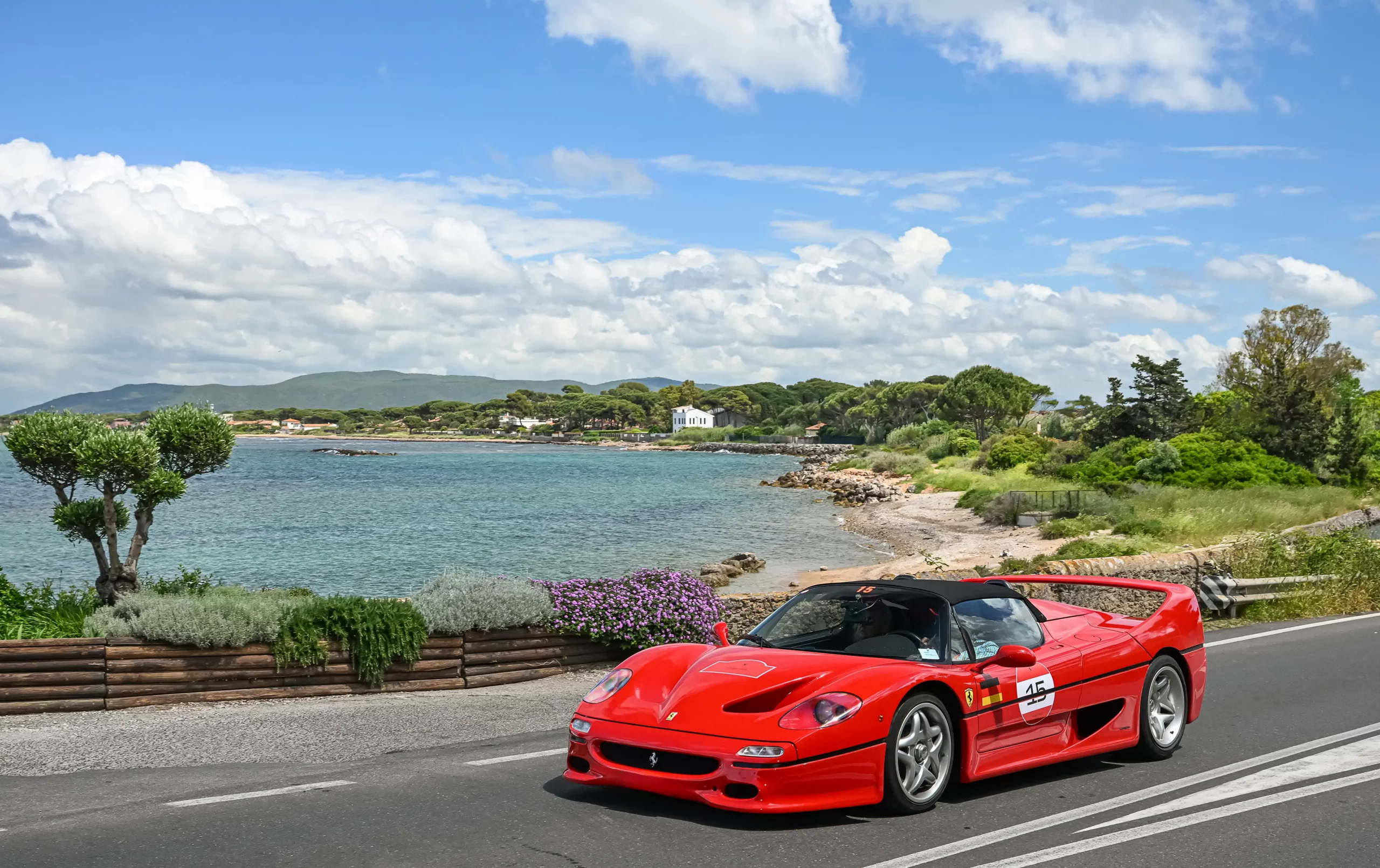
This weekend marked the end of the F50 Legacy Tour 2025, an exclusive Ferrari event dedicated to F50 owners. The F50, the third supercar from the Prancing Horse, was presented at the 1995 Geneva Motor Show to celebrate the company’s 50th anniversary.
Over 20 participating teams from 10 different nations covered 675 kilometers over three days of driving through Tuscany and Emilia-Romagna, visiting some of Italy’s most beautiful towns. In total, the F50s covered nearly 15,000 km, demonstrating the passion of these legendary supercar owners and the enduring reliability of the F50s, even 30 years after they left the production line.
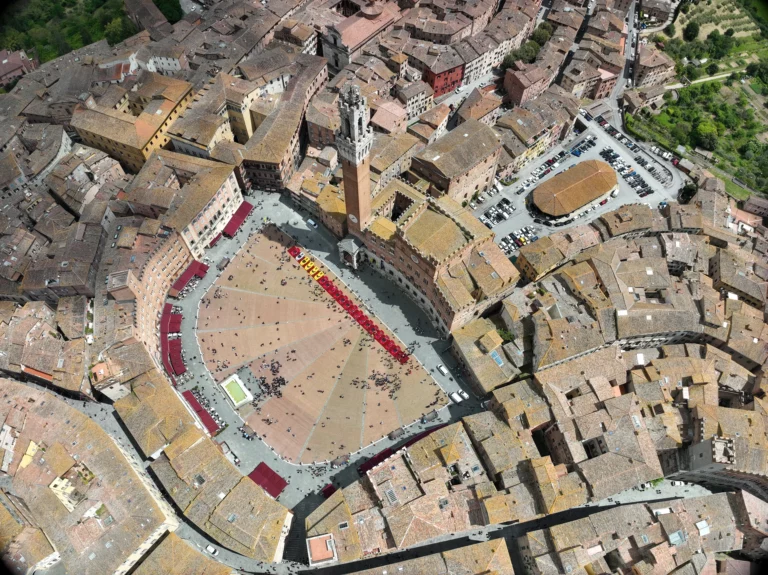
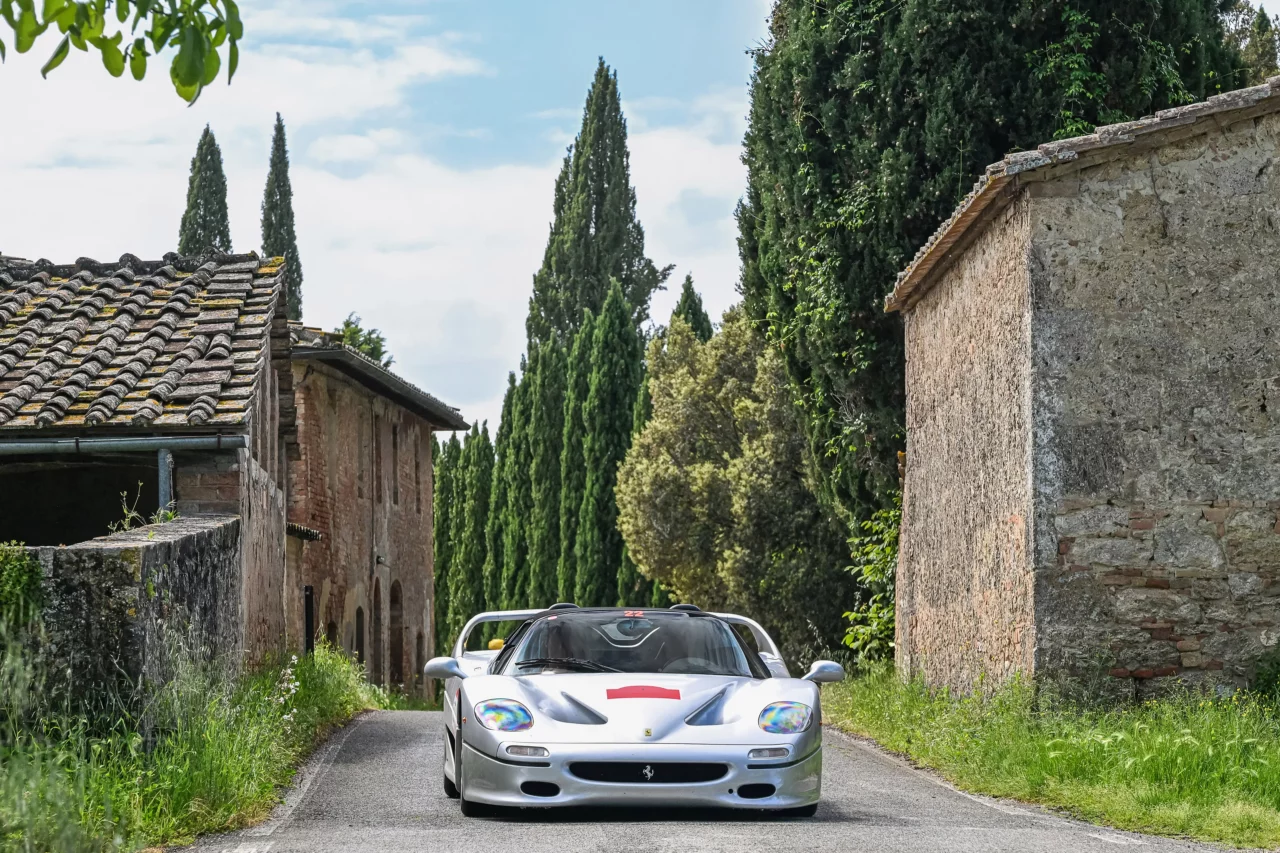
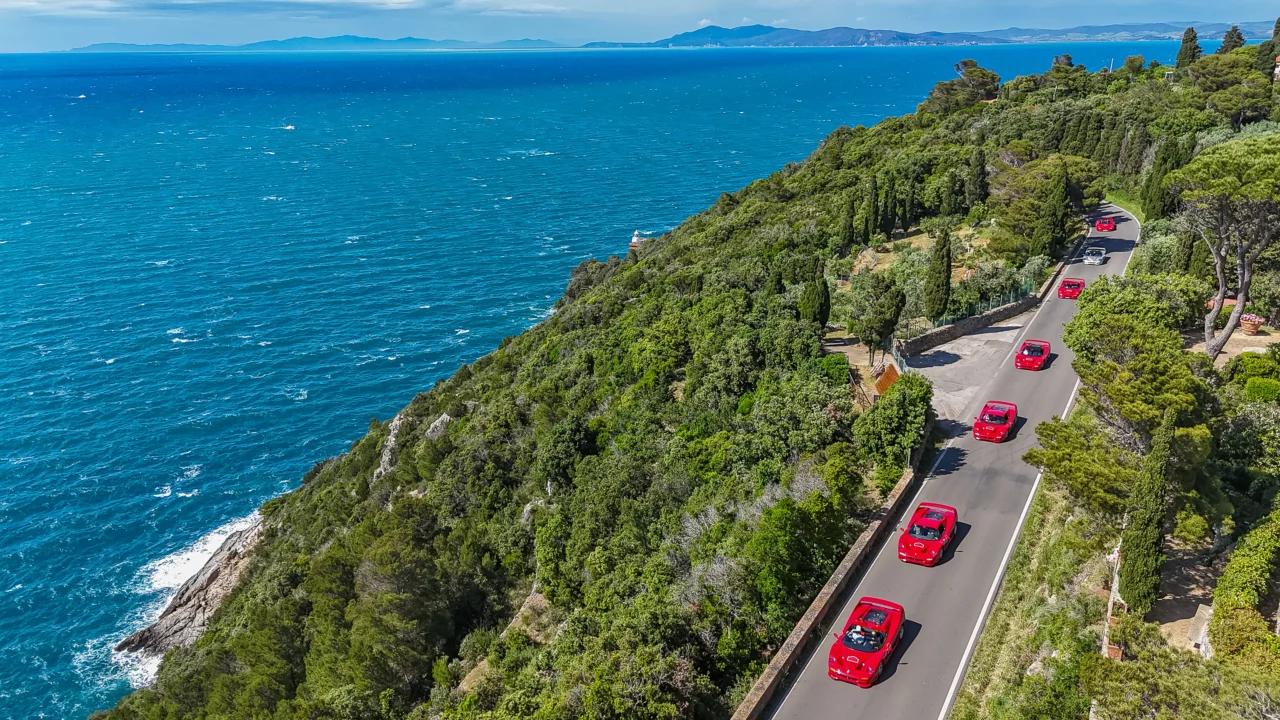
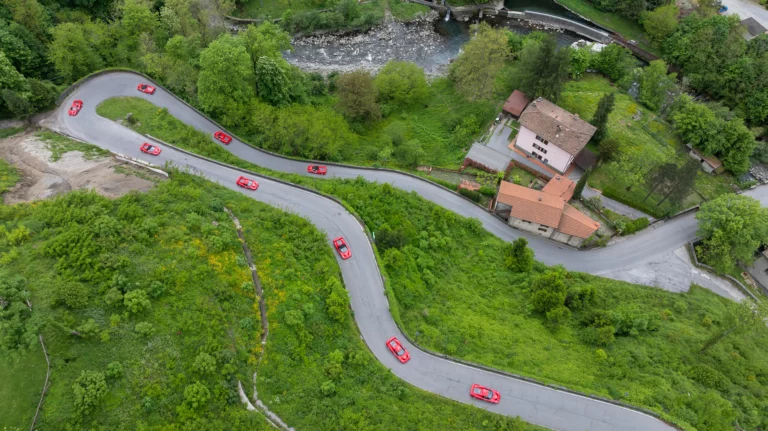
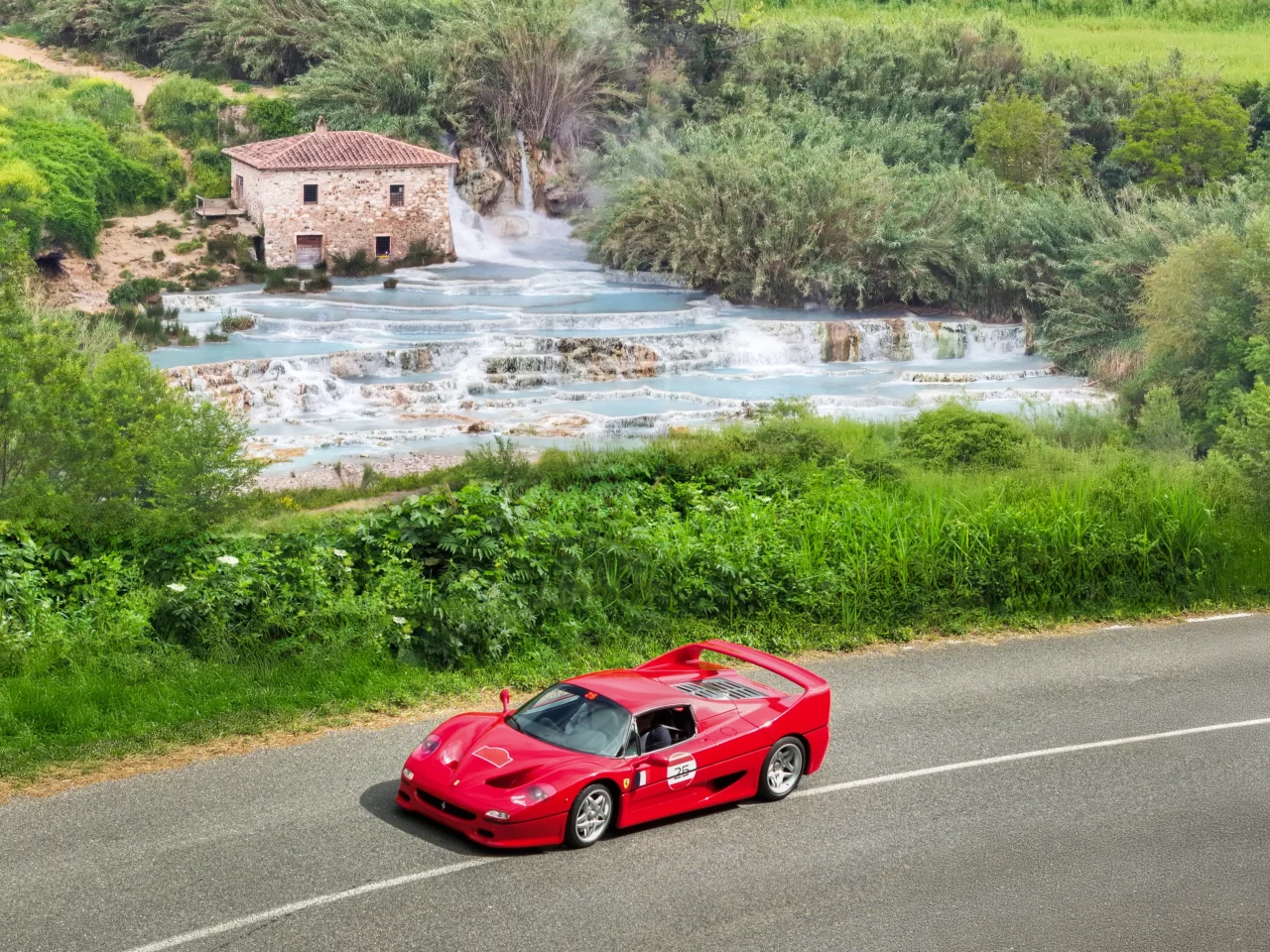
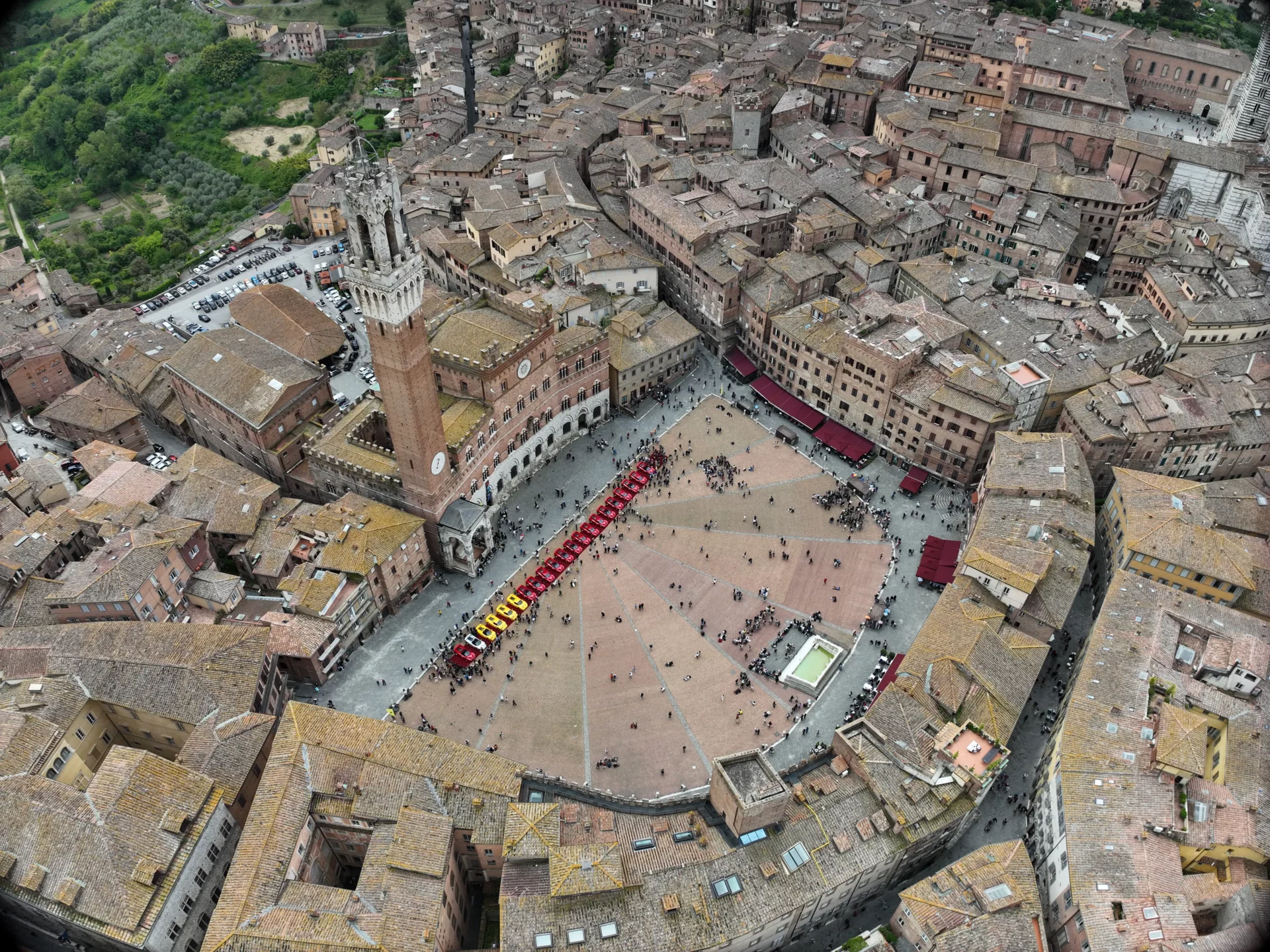
The Legacy Tour started from the Saturnia thermal baths and passed through enchanting cities and locations such as Grosseto, Porto Santo Stefano, and Siena, before arriving in Maranello on Friday, 9 May. Among the many organized activities, participants had the opportunity to meet Paolo Martinelli, the engineer responsible for developing the iconic V12 engine, which remains the most direct technological transfer from a Formula 1 engine to a Ferrari road car in recent history.
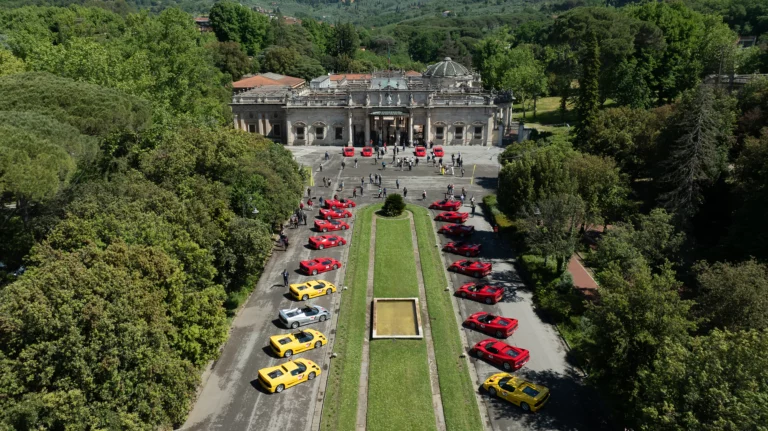
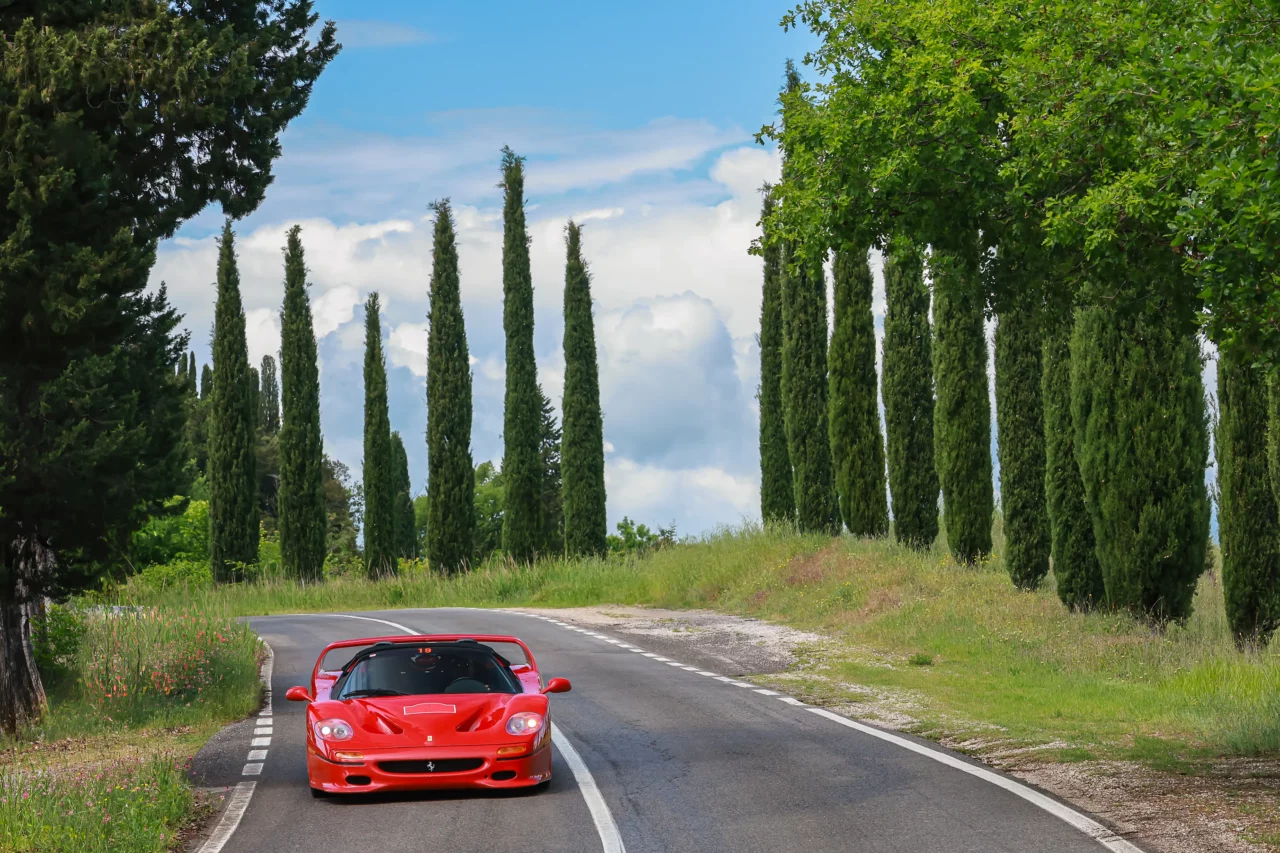
The event concluded with a parade of the cars and an honorary lap on the legendary Fiorano Circuit, where all Ferraris, including the F50, were developed since the track’s opening in 1972.
F50
Presented at the Geneva Motor Show in 1995 to celebrate Ferrari’s fiftieth anniversary two years in advance, the F50 embodies the ultimate extreme Ferrari spirit of the 1990s. It was the first supercar with the Prancing Horse badge powered by a naturally aspirated V12. This was a powerplant derived directly from Formula 1, installed in a longitudinal mid-rear position in a monocoque chassis built entirely from carbon fibre. This car represented the pinnacle of technological transfer from the premier motorsports class for its era. The engine boasted five valves per cylinder and was an actual stressed element of the chassis; the car itself made extensive use of advanced aerodynamics, and featured a suspension system with horizontally mounted push-rod dampers. The F50 was also equipped with a removable Targa top roof to deliver a driving experience closer to that of a race car, a characteristic also accentuated by the lack of ABS and power assisted steering. 349 examples were built, a number chosen as it was “one less than the demand from its intended market”.