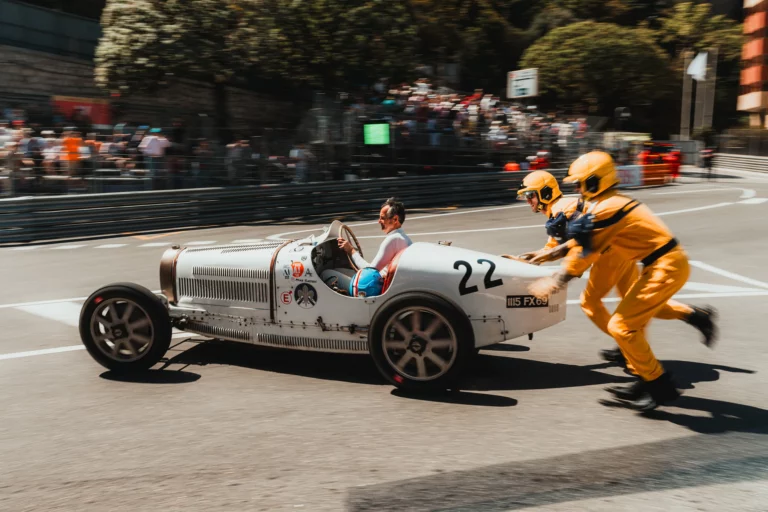
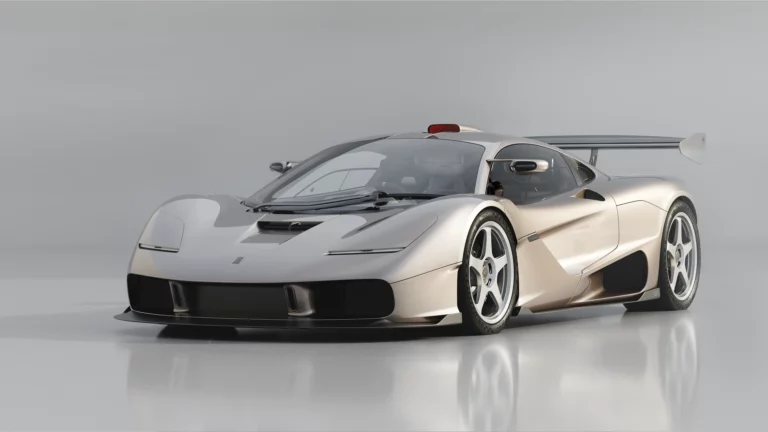
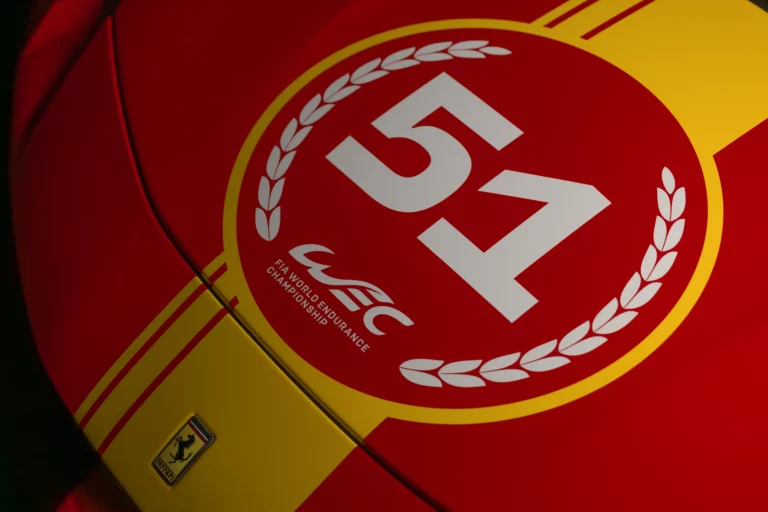
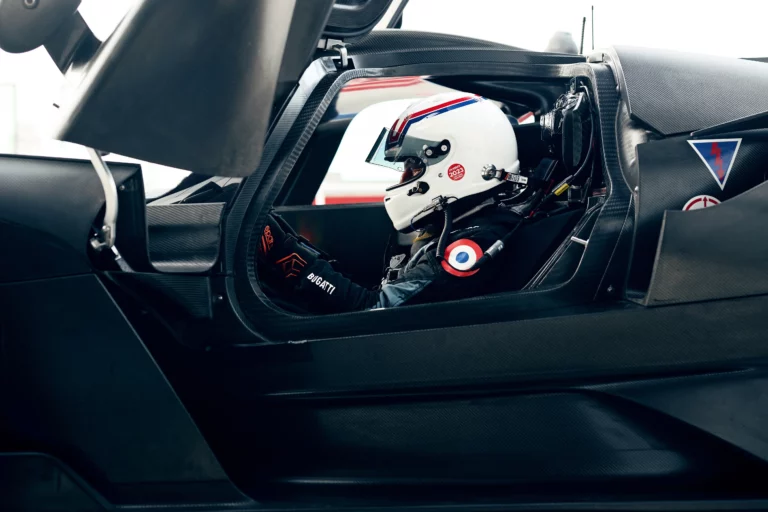
Stretching across the public roads and permanent racing facilities surrounding the historic city of Le Mans, Circuit de la Sarthe is one of the world’s most famous motorsport venues. Since hosting the inaugural 24 Hours of Le Mans in 1923, the circuit has become the ultimate proving ground for automotive engineering, reliability and endurance.
Unlike conventional permanent circuits, Circuit de la Sarthe combines purpose-built racing sections with closed public roads, creating a unique layout where cars race through forests, villages and open countryside before returning to the permanent Bugatti Circuit complex.
For more than a century, manufacturers have come to Le Mans not simply to race, but to demonstrate the durability, efficiency and innovation of their automobiles under the most demanding conditions imaginable.
Few places have influenced the automobile more profoundly.
In Brief
- Circuit de la Sarthe has hosted the 24 Hours of Le Mans every year since 1923, except during wartime.
- Approximately two-thirds of the circuit consists of public roads that return to normal traffic outside race events.
- Before the Mulsanne chicanes were introduced in 1990, prototypes exceeded 400 km/h on the straight.
- The Porsche Curves are widely regarded as one of the greatest sequences of high-speed corners in world motorsport.
- More than 60% of a lap is spent at full throttle in modern Hypercars.
- Technologies pioneered at Le Mans—including disc brakes, turbocharging, diesel engines and hybrid systems—have influenced generations of production vehicles.
History
The origins of Circuit de la Sarthe are inseparable from the creation of the Automobile Club de l’Ouest (ACO), whose founders sought a competition capable of advancing automotive technology rather than merely determining the fastest driver.
The first 24 Hours of Le Mans was held in 1923, introducing a revolutionary concept: victory would depend not on outright speed, but on maintaining performance and reliability continuously for an entire day and night.
Over the decades, the circuit evolved alongside automotive technology. High-speed sections such as the legendary Mulsanne Straight became synonymous with astonishing top speeds, while tragic accidents—including the 1955 disaster—transformed international approaches to motorsport safety.
One of the most significant modifications occurred in 1990, when two chicanes were introduced along the Mulsanne Straight to reduce terminal speeds, which had exceeded 400 km/h for the fastest prototype cars.
Today, Circuit de la Sarthe remains the home of the world’s greatest endurance race and one of motorsport’s most revered venues.
Circuit Design
The modern Circuit de la Sarthe measures 13.626 kilometres, making it one of the longest circuits in international motorsport.
Its layout combines permanent racing facilities with approximately two-thirds public roads that remain open to normal traffic for most of the year.
The circuit is defined by enormous contrasts.
Fast technical sections through the permanent circuit lead onto the famous Mulsanne Straight before entering the flowing Indianapolis and Arnage complex. The spectacular Porsche Curves demand extraordinary aerodynamic confidence before the lap concludes with the Ford Chicanes beneath the grandstands.
Unlike Formula One circuits built around short, repeatable laps, Le Mans asks competitors to manage traffic, weather, daylight, fatigue and mechanical wear across an immense and constantly evolving environment.
LENGTH
13.626
kilometres
WIDTH
9–10
metres
DIRECTION
CW
clockwise
TURNS
30
12 left – 18 right
SURFACE
Asphalt
LONGEST STRAIGHT
1,715
metres
ELEVATION CHANGE
36.2
metres
OPENED
1923
103 years ago
Circuit de la Sarthe is defined by the extraordinary contrast between permanent racing sections and public roads, combining sustained high-speed running with heavy braking zones and technically demanding sequences across a lap of more than thirteen kilometres. Unlike conventional circuits, its challenge develops over a vast distance, requiring competitors to maintain precision and concentration while repeatedly transitioning between very different road characteristics.
The opening section establishes the circuit’s technical character through the Dunlop Chicane and the descent through the Esses towards Tertre Rouge, where a clean exit is essential for carrying speed onto the long Mulsanne section. The lap then becomes dominated by acceleration and braking, with the Mulsanne chicanes interrupting prolonged periods at very high speed before competitors arrive at Mulsanne Corner. From there, Indianapolis and Arnage demand exceptional braking accuracy and mechanical grip before the circuit returns to faster, flowing terrain through the Porsche Curves. The final Ford Chicanes again require precision and traction before competitors cross the start-finish line.
Although corners such as Tertre Rouge, Mulsanne, Indianapolis, Arnage and the Porsche Curves each possess legendary identities, the defining challenge of Circuit de la Sarthe is the need to combine speed, efficiency and consistency across an exceptionally long lap. Drivers who remain precise under braking, preserve momentum through the faster sections and manage the changing characteristics of the road while maintaining concentration through traffic are generally rewarded most strongly.
| Corner |
|---|
| T1 · Courbe Dunlop 057° · Right · 404 m |
| C1 · Chicane Dunlop |
| T2 072° · Left · 30 m |
| T3 071° · Right · 30 m |
| T4 · Virage de la Chapelle 048° · Right · 139 m |
| C2 · Esses de la Forêt |
| T5 087° · Left · 113 m |
| T6 049° · Right · 62 m |
| T7 · Virage du Tertre Rouge 047° · Right · 33 m |
| T8 · Courbe Antarès 013° · Right · 134 m |
| C3 · Chicane Daytona |
| T9 057° · Right · 47 m |
| T10 089° · Left · 70 m |
| T11 032° · Right · 71 m |
| C4 · Chicane Michelin |
| T12 056° · Left · 54 m |
| T13 090° · Right · 71 m |
| T14 028° · Left · 42 m |
| T15 · Courbe des Hunaudières 015° · Right · 97 m |
| T16 · Virage de Mulsanne 090° · Right · 32 m |
| T17 · Courbe du Golf 012° · Right · 83 m |
| T18 · Virage d'Indianapolis 094° · Left · 64 m |
| T19 · Virage d'Arnage 098° · Right · 26 m |
| T20 · Courbe du Buisson 014° · Left · 133 m |
| T21 · Virage Porsche 069° · Right · 167 m |
| T22 · Virage du Pont 047° · Left · 104 m |
| T23 · Virage du Karting 102° · Right · 267 m |
| T24 · Virage Corvette 059° · Left · 113 m |
| C5 · Chicane Maison Blanche |
| T25 018° · Right · 48 m |
| T26 025° · Left · 61 m |
| C6 · Chicane Ford |
| T27 053° · Left · 35 m |
| T28 057° · Right · 41 m |
| C7 · Chicane du Raccordement |
| T29 065° · Left · 14 m |
| T30 083° · Right · 23 m |
Circuit de la Sarthe occupies a unique position in automotive history as the home of the 24 Hours of Le Mans, one of the world’s most important motor races and the defining event of international endurance competition. Since the first running in 1923, Le Mans has transformed the roads surrounding the French city into a proving ground where speed must coexist with reliability, efficiency and the ability to survive an entire day and night of continuous competition.
The circuit has played an exceptional role in the development of the automobile. Manufacturers including Bentley, Alfa Romeo, Ferrari, Jaguar, Ford, Porsche, Audi, Peugeot and Toyota have used Le Mans to demonstrate new engineering approaches under some of motorsport’s most demanding conditions. Innovations involving aerodynamics, braking, lighting, turbocharging, diesel power, hybrid systems and energy recovery have all been tested through competition here, reinforcing the historic principle that endurance racing can accelerate the development of road-car technology.
Le Mans has also created some of motorsport’s most important manufacturer rivalries. Bentley established its international reputation through victories during the race’s early decades; Ferrari and Ford produced one of racing’s defining confrontations during the 1960s; Porsche built an extraordinary endurance legacy around the event; and successive generations of manufacturers have continued to treat victory at La Sarthe as one of the highest achievements in automotive competition.
Today the circuit remains the centrepiece of the FIA World Endurance Championship, while the 24 Hours of Le Mans forms one part of motorsport’s unofficial Triple Crown alongside the Monaco Grand Prix and Indianapolis 500. Yet its significance extends beyond championships and statistics. Circuit de la Sarthe represents endurance racing as an engineering philosophy: performance measured not simply by how quickly a machine can complete one lap, but by how efficiently, reliably and consistently it can continue performing for twenty-four hours. Few places have influenced the development of racing cars—or the mythology of the automobile—as profoundly as Le Mans.
Visitor Experience
Attending Le Mans is unlike visiting any other race.
For twenty-four continuous hours the circuit becomes a temporary city. Hundreds of thousands of spectators camp throughout the surrounding forests, creating an atmosphere that blends motorsport, engineering, festival culture and tradition.
Visitors can explore large sections of the circuit, moving between grandstands, public viewing areas and famous corners while experiencing the extraordinary transition from daylight to darkness and back again.
Outside race week, the permanent Bugatti Circuit hosts motorcycle racing, GT competition and track days, while the nearby Le Mans Museum preserves one of the richest collections of endurance racing history in the world.
Climate
| Month | High °C | Low °C | Rainfall mm | Rainy days | Daylight h |
|---|---|---|---|---|---|
| January | 8° | 3° | 70 | 12 | 8.9 |
| February | 9° | 2° | 58 | 11 | 10.3 |
| March | 12° | 4° | 58 | 12 | 11.9 |
| April | 15° | 6° | 60 | 12 | 13.7 |
| May | 18° | 10° | 69 | 12 | 15.2 |
| June | 22° | 13° | 54 | 10 | 16.0 |
| July | 24° | 15° | 50 | 9 | 15.6 |
| August | 24° | 15° | 52 | 9 | 14.2 |
| September | 21° | 12° | 56 | 9 | 12.6 |
| October | 16° | 10° | 75 | 12 | 10.8 |
| November | 11° | 6° | 70 | 13 | 9.3 |
| December | 8° | 3° | 78 | 13 | 8.5 |
Monthly averages for Circuit de la Sarthe, 1991–2020.
Generated using Copernicus Climate Change Service information 2026 (CC BY 4.0).
Neither the European Commission nor ECMWF is responsible for any use that may be made of the Copernicus information or data it contains.
Location
Circuit de la Sarthe surrounds the southern outskirts of Le Mans in western France. The semi-permanent circuit incorporates public highways together with the permanent Bugatti Circuit, creating one of motorsport’s most distinctive layouts.
Its proximity to Paris and excellent transport connections have helped make Le Mans one of the world’s great pilgrimage destinations for motorsport enthusiasts.
Address
Place Luigi Chinetti
Circuit de la Sarthe
72100 Le Mans
Sarthe, Pays de la Loire
France
Website