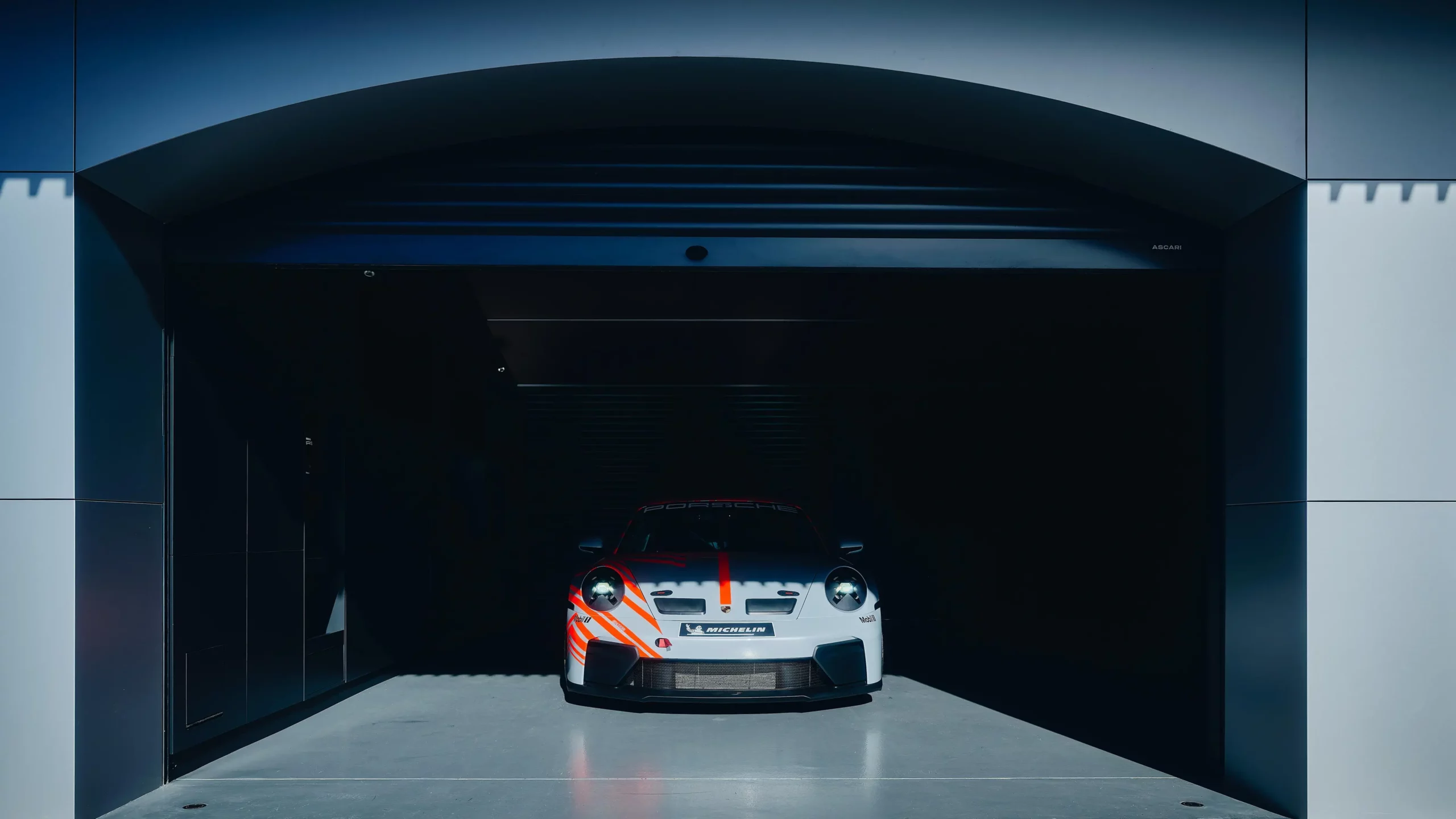
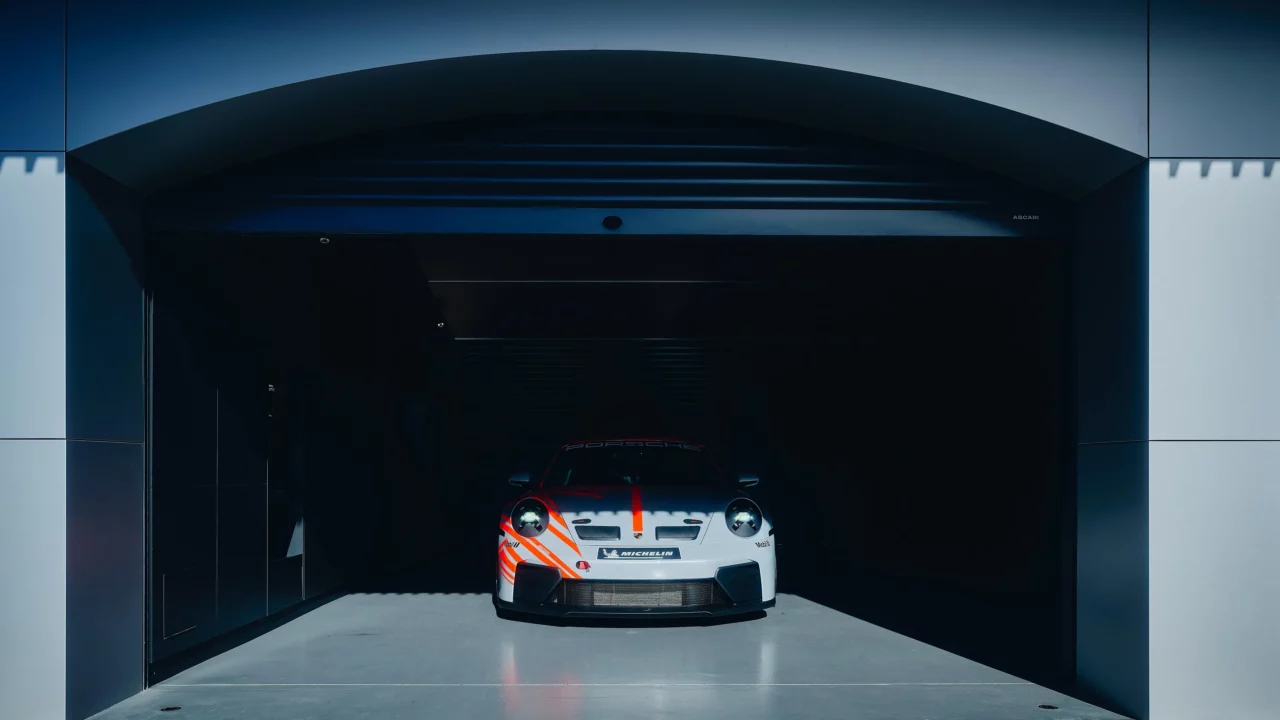
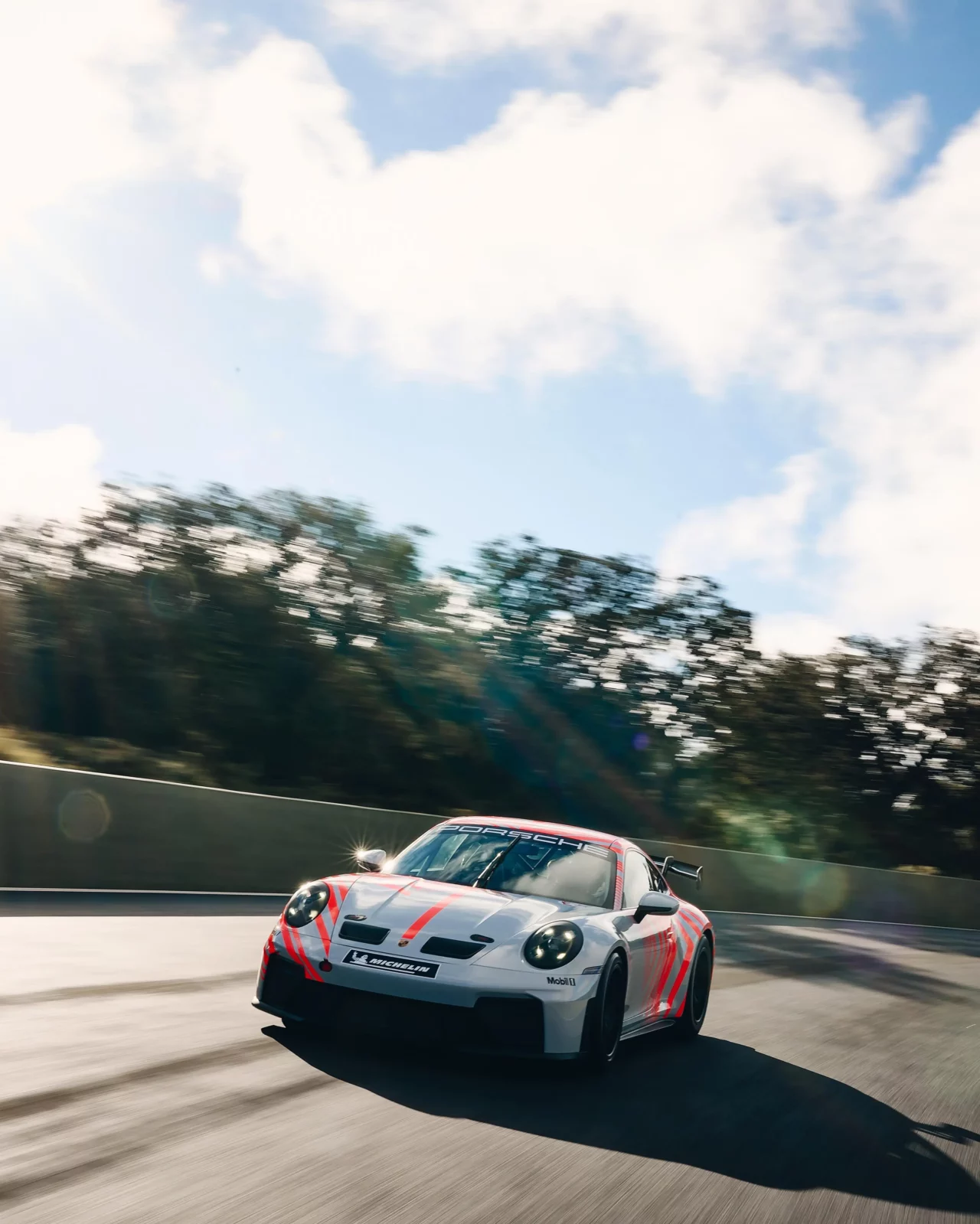
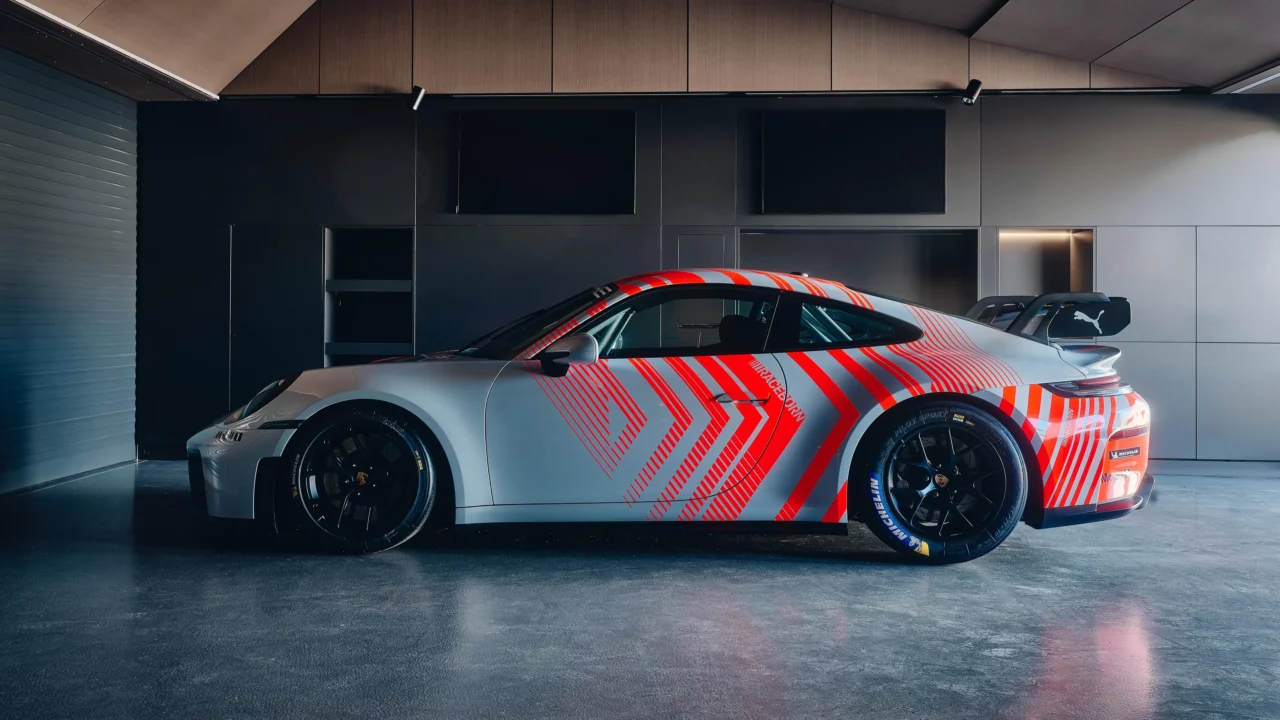
Dr. Ing. h.c. F. Porsche AG is opening up a new approach to customer motorsport: The 911 Challenge combines the DNA of the current 911 GT3 with that of a racing car. Thanks to production-based technology, comprehensive safety features and motorsport-ready driving dynamics systems, the Challenge provides a gateway to competitive racing. The structure for operating and spare parts costs has been developed specifically for this purpose.
In Brief
- Porsche forges a new link between road-going sports cars and racing cars
- Classic 911 characteristics complemented by all the relevant safety and racing features
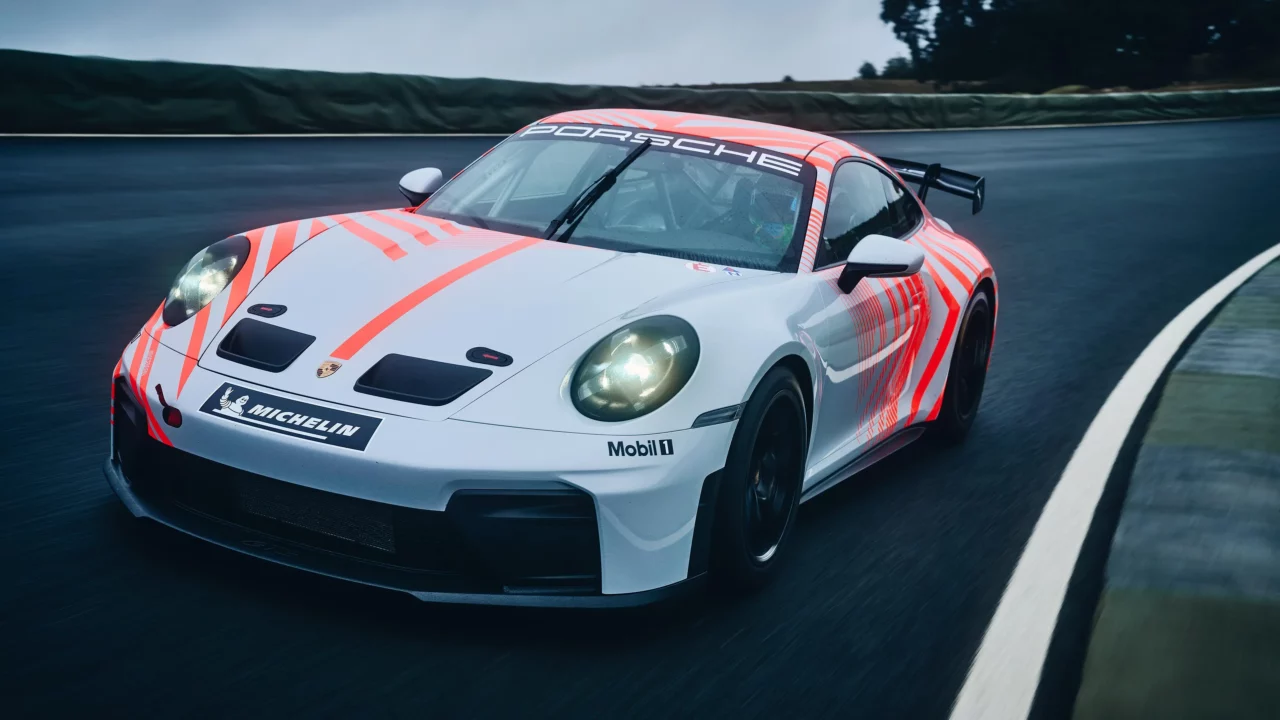
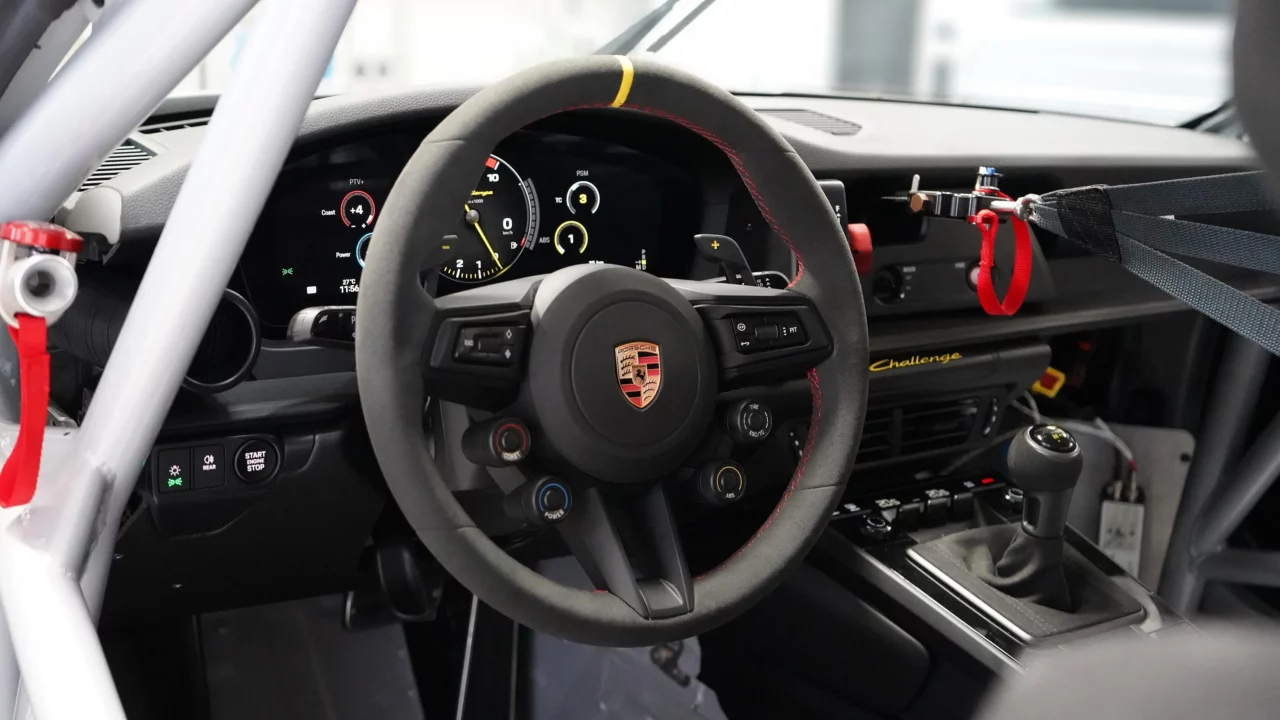
The latest addition to Porsche’s customer motorsport family brings things full circle: from now on, all four of the GT racing cars by the ‘Sportwagenschmiede’ are based on the 911. At the same time, the new 911 Challenge expands the range with a new entry-level model. Unlike the Cup racing car unveiled in August 2025, the Challenge utilises a significant amount of production-based GT3 technology. In addition to the aerodynamics, this includes a seven-speed PDK gearbox, the steering wheel from the GT3 RS with enhanced, racing-specific functions, and air conditioning. Adjustable driver assistance systems such as ABS, traction control and the Electronic Stability Control (ESC) make it easier to get started in motorsport, as do variable driving dynamics systems. These also include the multi-stage adjustable Porsche Torque Vectoring Plus (PTV+). From the 2027 season onwards, the 911 Challenge can be entered in numerous one-make series worldwide.
“Since their introduction, the GT3 models have shaped Porsche’s identity as a sports car manufacturer like almost no other model range. They are conceived and developed in close collaboration with motorsport. With the 911 Challenge, this tradition is being expanded to include a model that allows new customer groups to experience the thrill of motorsport in a 911.”
Thomas Laudenbach,
Vice President Porsche Motorsport.
“The 911 Challenge brings the driving experience of the road-legal 911 GT3 into customer motorsport more directly than ever before. Drivers can get to grips with it without a long learning curve and can complete their first kilometres on the racetrack in a familiar vehicle design. We are following a principle here that dates back to the 1960s: our customers receive a race-ready car complete with motorsport safety technology, data acquisition, spare parts support and technical documentation.”
Michael Dreiser,
Head of Sales at Porsche Motorsport
Standard engine and PDK gearbox from the 911 GT3
The high-revving 4.0-litre six-cylinder boxer engine is largely derived from the production GT3 but delivers a maximum power output of 379 kW (515 PS) at 8,500 revolutions per minute. The maximum revs are 9,000 rpm. The modified rear silencer also features a catalytic converter in the racing version but does not require a particulate filter. Power is transmitted via a seven-speed dual-clutch PDK gearbox, just as in the production car. Features such as the option of automatic or manual gear changes via paddles on the steering wheel remain.
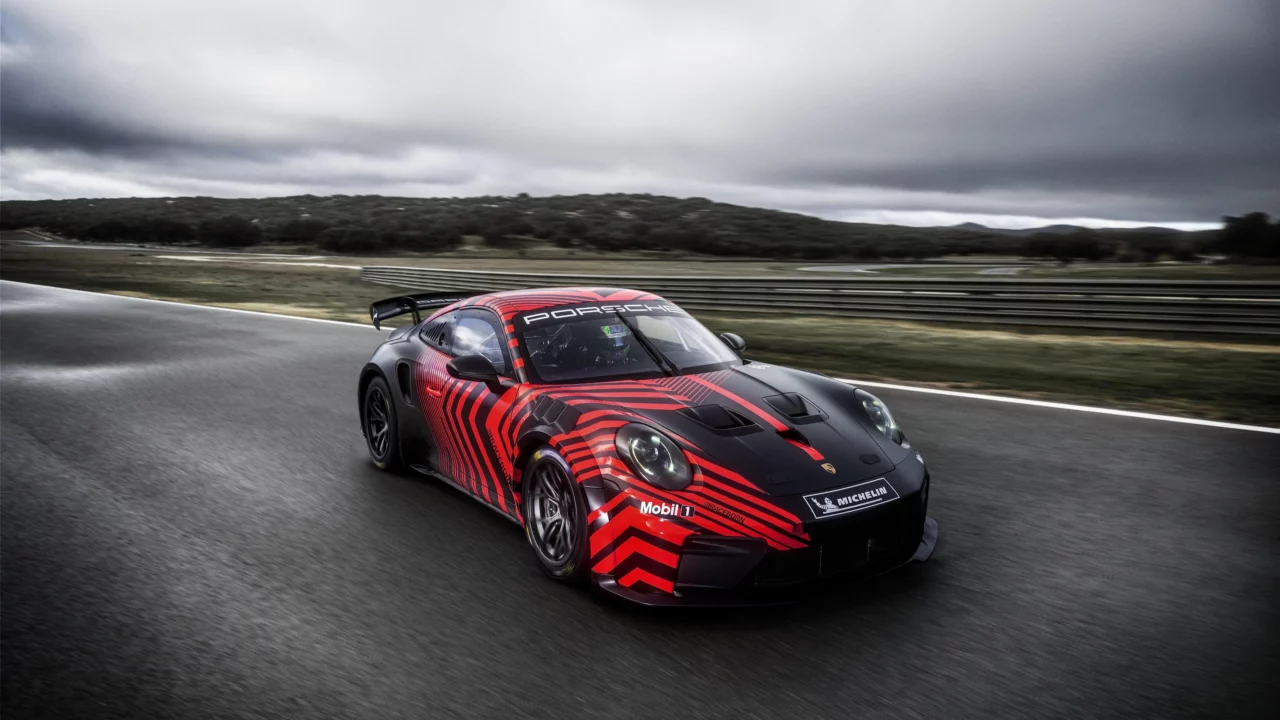
In terms of the chassis, Challenge customers can expect a host of racing components, such as those from the 911 Cup. The shock absorbers operate with a motorsport-specific characteristic curve. The standard anti-roll bar is adjustable in three positions. The treadless racing slicks are fitted to 18-inch wheels and secured via the standard five-hole mounting pattern. In this respect, the Challenge takes its cue from the recently unveiled 911 GT4 R. The racing brake system with steel brake discs (380 mm diameter at the front and rear) also corresponds to the technology used in the GT4 R.
Bodywork and cockpit: safety features of the highest standard
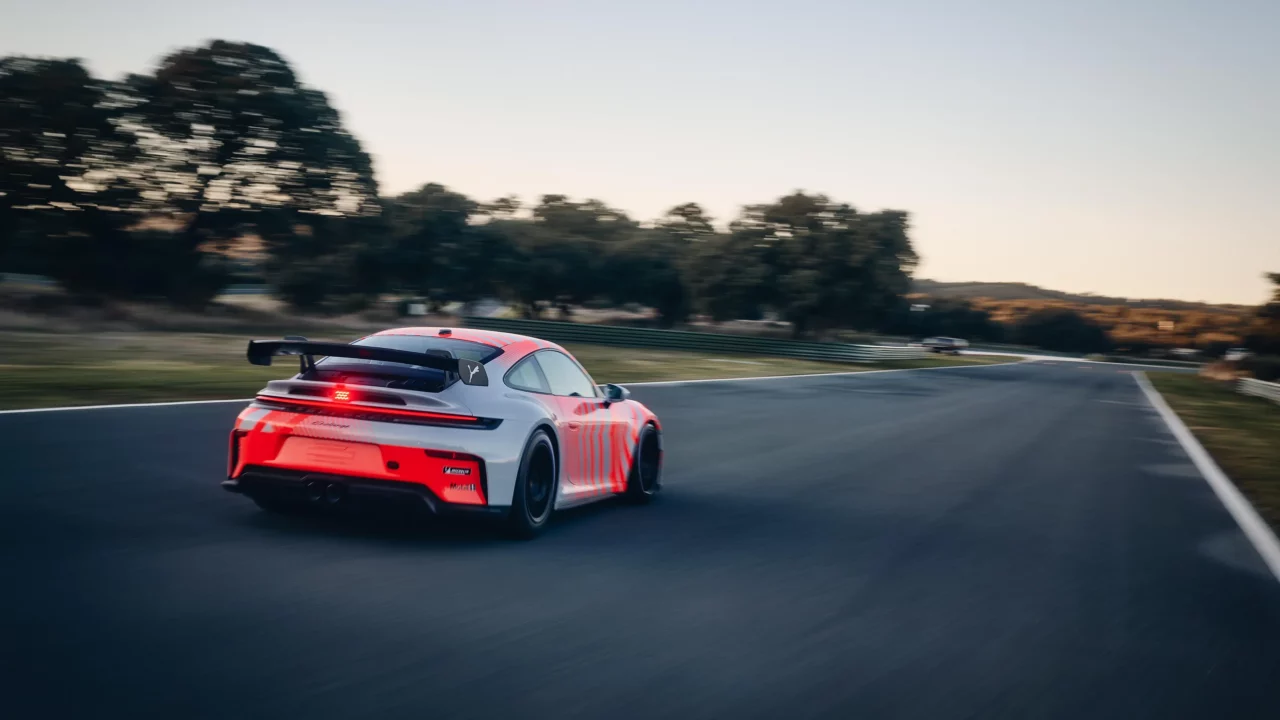
The dimensions of the 911 Challenge are identical to those of the GT3, as are all the key body components. An integrated air-jack system (three jacks) is included as standard. A FIA-certified rain light has been added to the rear, whilst the bonnet can be opened via integrated quick-release fasteners. The rear wing is mechanically adjustable to four different angles. Inside, the difference from the road-going version becomes more apparent: all sound-deadening materials, carpets and trim have been removed. Instead, the welded-in roll cage reinforces the vehicle’s structure and protects the driver in the case of a collision. Further safety features include, for example, a 110-litre FT3 fuel tank, an adjustable racing bucket seat with a six-point harness and a fire-extinguishing system. The Challenge is designed as a competition car without road approval and makes no compromises in its circuit-focused specification.
The new 911-based racing car hierarchy
As an entry-level model, the new 911 Challenge succeeds the original Cayman GT4 Clubsport and the more recent 718 Cayman GT4 RS Clubsport. Porsche’s most affordable competition car appeals to both racing novices and seasoned competitors alike. Its main arena is brand-specific one-make series such as the Porsche Challenges and Trophies. As the direct successor to the 718 Cayman GT4 RS Clubsport, the 911 GT4 R is intended for the international GT4 category. This is one of the fastest-growing segments in global customer motorsport. The 911 Cup competes in the Porsche Mobil 1 Supercup, the national Carrera Cup series and other Porsche championships. This versatile racing car is also popular in endurance racing and open-make GT races. The 911 GT3 R is fielded by customer teams in international GT3 racing in accordance with FIA regulations. The top-of-the-range model has already celebrated class victories at Le Mans, won the Endurance Trophy for teams and drivers in the World Endurance Championship, and secured two DTM drivers’ titles and one manufacturers’ title. At the end of June this year, it added an overall victory at the 24 Hours of Spa-Francorchamps to its list of achievements.