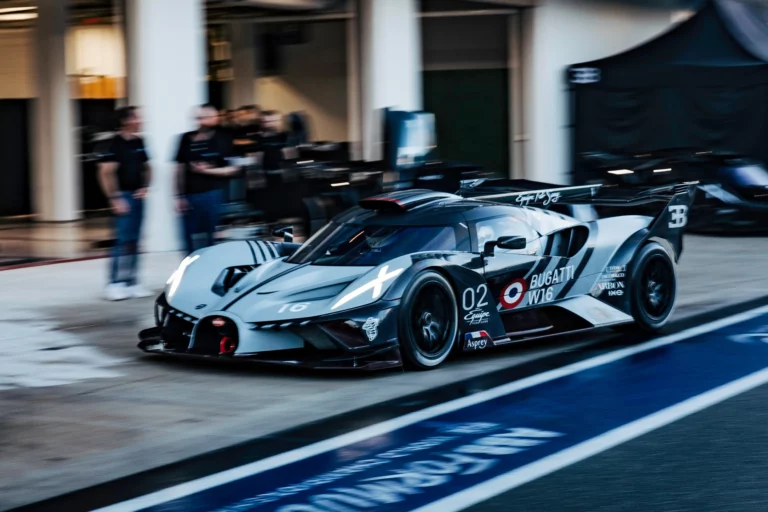
Constructed around Hard Rock Stadium, the Miami International Autodrome is one of Formula One’s newest purpose-built Grand Prix venues. Since debuting in 2022, the circuit has established itself as a distinctive addition to the championship by combining permanent racing infrastructure with temporary sections surrounding one of North America’s premier sporting complexes.
Rather than functioning as a traditional street circuit, the Autodrome uses privately owned roads and purpose-built track sections to create a layout that blends long acceleration zones, technical chicanes and flowing high-speed corners. This combination produces racing where tyre strategy, DRS effectiveness and overtaking opportunities often prove as important as outright pace.
Located in the heart of South Florida, the circuit reflects Miami’s international character while introducing a modern interpretation of the American Grand Prix experience.
In Brief
- The Miami International Autodrome debuted in 2022.
- The circuit is built around Hard Rock Stadium rather than through downtown Miami.
- Three DRS zones make it one of Formula One’s most overtaking-friendly circuits.
- The layout combines permanent racing infrastructure with temporary roads.
- South Florida’s heat and humidity make tyre management a decisive factor.
- The circuit surface continues to evolve significantly throughout each race weekend as more rubber is laid down.
History
The Miami Grand Prix was announced after several years of planning aimed at expanding Formula One’s presence in the United States.
Following extensive consultation with local authorities and the surrounding community, construction began around Hard Rock Stadium using a hybrid design that incorporated both permanent and temporary infrastructure.
The inaugural Miami Grand Prix took place in 2022, becoming Formula One’s second race in the United States before later being joined by Las Vegas. From the outset, the event combined world-class motorsport with Miami’s globally recognised culture of entertainment, hospitality and international business.
Continuous refinements to the circuit surface and facilities have improved racing quality while maintaining the circuit’s original philosophy.
Circuit Design
The Miami International Autodrome measures 5.412 kilometres and features 19 corners arranged in a clockwise direction.
The lap combines three distinct personalities.
The opening sector consists of flowing high-speed corners where aerodynamic efficiency is rewarded. The middle sector introduces slower technical bends and the narrow chicane between Turns 14 and 15, demanding careful braking and traction. The final sector features long straights connected by heavy braking zones that generate multiple overtaking opportunities.
The circuit incorporates three DRS zones, among the highest number on the Formula One calendar, making strategic positioning and racecraft particularly important.
Although temporary in nature, the circuit’s generous width and modern safety standards allow racing that more closely resembles a permanent Grand Prix venue than a traditional street circuit.
LENGTH
5.412
kilometres
WIDTH
10–15
metres
DIRECTION
CCW
counter-clockwise
TURNS
19
12 left – 7 right
SURFACE
Asphalt
LONGEST STRAIGHT
1,285
metres
ELEVATION CHANGE
1.8
metres
OPENED
2022
4 years ago
Miami International Autodrome combines slow technical sections with faster, more open sequences, placing considerable emphasis on braking stability and traction. The opening corners establish the rhythm before the circuit accelerates through a series of flowing changes of direction around the Hard Rock Stadium complex.
The middle part of the lap contains some of its fastest sections, where commitment and aerodynamic stability become increasingly important. This contrasts sharply with the tight sequence around Turns 14–16, where heavy braking leads into the circuit’s slowest and most technical section before drivers accelerate onto the long back straight.
Although Miami lacks the elevation and natural flow of a traditional road course, its challenge comes from managing these contrasting sections efficiently. Strong performance requires confidence through the faster sequences without compromising the braking, rotation and traction needed in the slower corners.
| Corner |
|---|
| T1 111° · Right · 41 m |
| T2 065° · Left · 56 m |
| T3 132° · Right · 327 m |
| T4 070° · Left · 119 m |
| T5 084° · Right · 118 m |
| T6 059° · Left · 88 m |
| T7 090° · Left · 137 m |
| T8 085° · Left · 56 m |
| T9 021° · Right · 72 m |
| T10 040° · Left · 289 m |
| T11 114° · Left · 33 m |
| T12 150° · Right · 120 m |
| T13 062° · Left · 49 m |
| T14 105° · Left · 19 m |
| T15 091° · Right · 22 m |
| T16 104° · Left · 32 m |
| T17 148° · Left · 54 m |
| T18 060° · Left · 79 m |
| T19 057° · Right · 195 m |
Miami International Autodrome joined the Formula One World Championship in 2022, establishing a second United States Grand Prix alongside Austin before Las Vegas expanded the American calendar further in 2023. Its creation reflected Formula One’s renewed growth in the United States and the increasing importance of major American cities to the championship’s international strategy.
The Miami Grand Prix combines Formula One with the entertainment and hospitality infrastructure surrounding Hard Rock Stadium, creating an event conceived as much around its destination as its racing venue. This approach has made Miami representative of a newer generation of Grands Prix integrating motorsport with large-scale entertainment, corporate hospitality and international tourism.
While its history remains short compared with America’s established circuits, Miami has quickly become a prominent fixture in Formula One’s contemporary American presence. Its longer-term significance will depend on the history created there, but it already illustrates an important period in which Formula One substantially expanded its cultural and commercial presence in the United States.
Visitor Experience
The Miami Grand Prix offers a distinctive blend of motorsport and South Florida lifestyle.
Purpose-built grandstands surround the circuit, while hospitality areas overlook key overtaking zones and the stadium complex. Visitors can combine the race with Miami’s renowned beaches, multicultural cuisine, contemporary art scene and vibrant nightlife.
The nearby cities of Miami and Miami Beach provide an abundance of attractions, while the circuit’s location adjacent to Hard Rock Stadium creates a festival atmosphere unlike any other Formula One event in North America.
Climate
| Month | High °C | Low °C | Rainfall mm | Rainy days | Daylight h |
|---|---|---|---|---|---|
| January | 23° | 18° | 59 | 10 | 10.7 |
| February | 24° | 18° | 48 | 9 | 11.3 |
| March | 25° | 19° | 60 | 9 | 12.0 |
| April | 27° | 21° | 68 | 10 | 12.8 |
| May | 28° | 23° | 110 | 15 | 13.4 |
| June | 29° | 25° | 174 | 23 | 13.7 |
| July | 30° | 26° | 134 | 24 | 13.6 |
| August | 30° | 26° | 169 | 25 | 13.0 |
| September | 29° | 25° | 183 | 25 | 12.3 |
| October | 28° | 24° | 136 | 18 | 11.5 |
| November | 26° | 21° | 68 | 12 | 10.9 |
| December | 24° | 19° | 53 | 12 | 10.5 |
Monthly averages for Miami International Autodrome, 1991–2020.
Generated using Copernicus Climate Change Service information 2026 (CC BY 4.0).
Neither the European Commission nor ECMWF is responsible for any use that may be made of the Copernicus information or data it contains.
Location
The Miami International Autodrome is located in Miami Gardens, approximately 25 kilometres north of downtown Miami.
The venue surrounds Hard Rock Stadium and is easily accessible from Miami International Airport and Fort Lauderdale–Hollywood International Airport.
Address
33056 Miami Gardens
Miami-Dade County, Florida
USA
Website