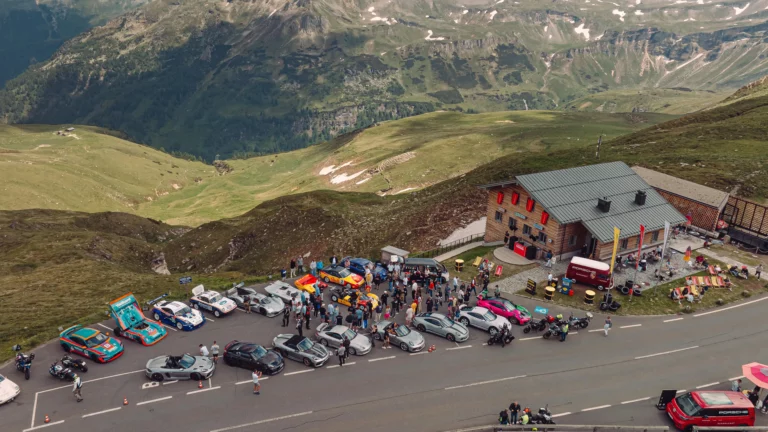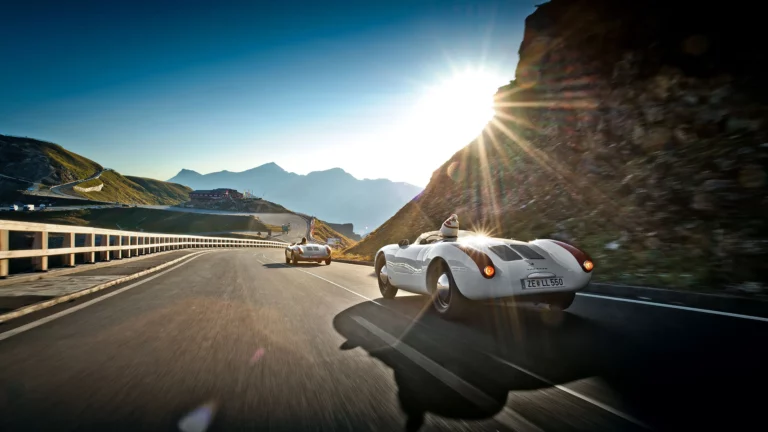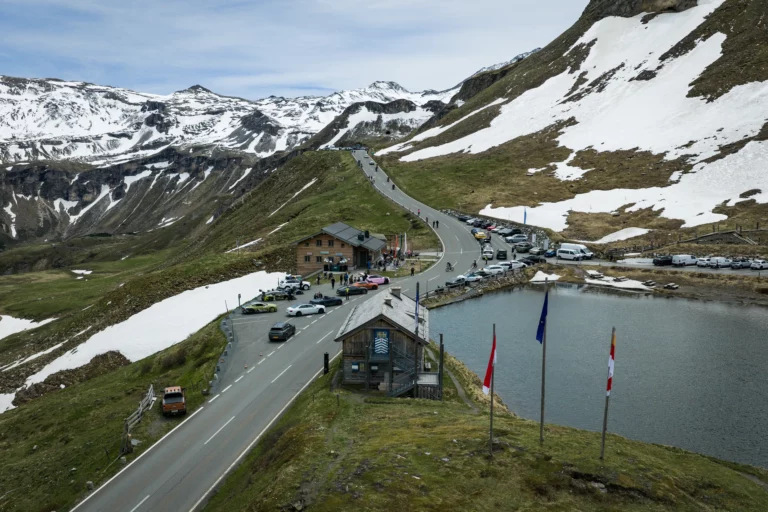
The Grossglockner High Alpine Road is among Europe’s most celebrated mountain journeys. Its carefully engineered curves climb through dramatic Austrian scenery towards views of the country’s highest peak, making the road itself the principal attraction. For drivers and riders, the experience combines altitude, changing weather and an enduring fascination with the art of building roads through mountains.
Climate
Best time to visit · Aug
Temperature High / low °C
Daylight Hours a day
Rainfall 1,682 mm a year
Monthly averages for Grossglockner, 1991–2020.
Best time to visit: when clear, rainless days between 18 and 27 °C are likeliest.
Generated using Copernicus Climate Change Service information 2026 (CC BY 4.0).
Neither the European Commission nor ECMWF is responsible for any use that may be made of the Copernicus information or data it contains.
| Month | High °C | Low °C | Rainfall mm | Rainy days | Daylight h |
|---|---|---|---|---|---|
| January | −8° | −13° | 89 | 14 | 9.0 |
| February | −6° | −13° | 84 | 14 | 10.3 |
| March | −3° | −10° | 116 | 17 | 11.9 |
| April | 1° | −6° | 116 | 17 | 13.6 |
| May | 5° | −3° | 145 | 21 | 15.1 |
| June | 9° | 1° | 198 | 23 | 15.8 |
| July | 12° | 3° | 224 | 23 | 15.5 |
| August | 12° | 4° | 207 | 21 | 14.2 |
| September | 8° | 0° | 148 | 16 | 12.5 |
| October | 4° | −4° | 129 | 14 | 10.9 |
| November | −2° | −9° | 121 | 15 | 9.4 |
| December | −7° | −13° | 105 | 15 | 8.6 |